November 05, 2025
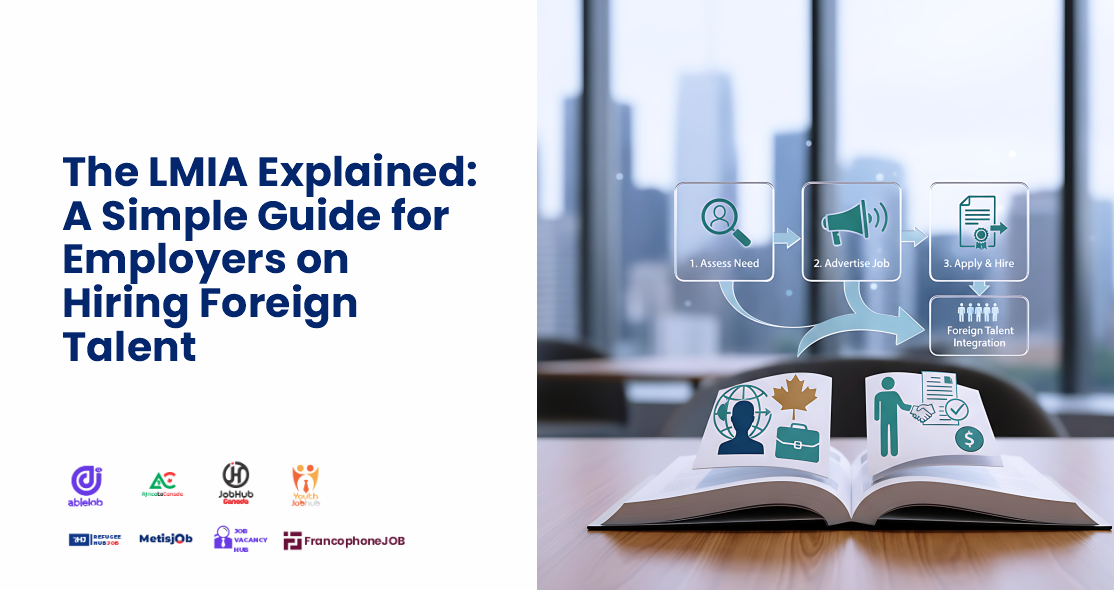
If you are a Canadian employer looking to hire talent from outside the country, you have likely encountered the term "LMIA". This process can seem complex, but it is a straightforward system designed to protect the Canadian job market.
This simple guide will explain what an LMIA is, when you need one, and what the process looks like.
LMIA stands for Labour Market Impact Assessment.
In short, it is a document from Employment and Social Development Canada (ESDC) that gives an employer permission to hire a temporary foreign worker.
The entire purpose of an LMIA is to ensure that hiring a foreign worker will have a positive or neutral impact on the Canadian labour market. It is a "Canadians first" check. To get a positive LMIA, you must prove that there is a genuine need for a foreign worker and that no Canadian citizen or permanent resident is available to do the job.
This is the most important question for any employer. The answer is no.
There are two main programmes for hiring foreign workers:
Temporary Foreign Worker Program (TFWP): This program requires an LMIA. It is used when you need to fill a role and have proven you could not find a Canadian to do it.
International Mobility Program (IMP): This program is LMIA exempt. It is used in situations that serve Canada's broader economic, social, or cultural interests.
You generally do not need an LMIA if your foreign hire falls under an IMP category, such as
International Agreements: This includes trade agreements like the Canada-United States-Mexico Agreement (CUSMA).
Intra-Company Transfers: When you are transferring an executive, senior manager, or worker with specialised knowledge from one of your company's foreign offices to a Canadian one.
Significant Benefit: When you can demonstrate the worker will bring a significant social, cultural, or economic benefit to Canada.
If your hiring situation does not fit an exemption, you will need to apply for an LMIA.
While the details can vary by wage and stream, the general process follows these key steps:
Step 1: Advertising Before you can even apply, you must prove you tried to hire a Canadian. This is the most critical step. You must advertise the job opening on the Government of Canada's Job Bank and at least two other eligible sources. The advertising must run for a minimum of four consecutive weeks and be active within three months of your application.
Step 2: The Application Once you have completed the advertising requirements, you submit your application to ESDC. This application includes:
Your business legitimacy documents.
Proof of your recruitment and advertising efforts.
A "Transition Plan" (for high-wage roles) explaining how you will reduce your reliance on foreign workers in the future, for example, by training Canadians or supporting the foreign worker's path to permanent residence.
A processing fee.
Step 3: The Decision An ESDC officer will assess your application. They may call you to verify details. If they are satisfied that you met all requirements and that no Canadian is available, they will issue you a positive LMIA.
A positive LMIA is not a work permit. Your work is not quite done.
You must give a copy of the positive LMIA decision letter to the foreign worker you plan to hire. The worker will then use this document, along with their job offer, to apply to Immigration, Refugees and Citizenship Canada (IRCC) for their work permit.
The LMIA process is detailed, but it is a manageable and essential pathway for accessing the global talent pool to grow your business when you face genuine labour shortages.